
By: Nicole Rosania, travel content creator and writer at The Abroad Blog
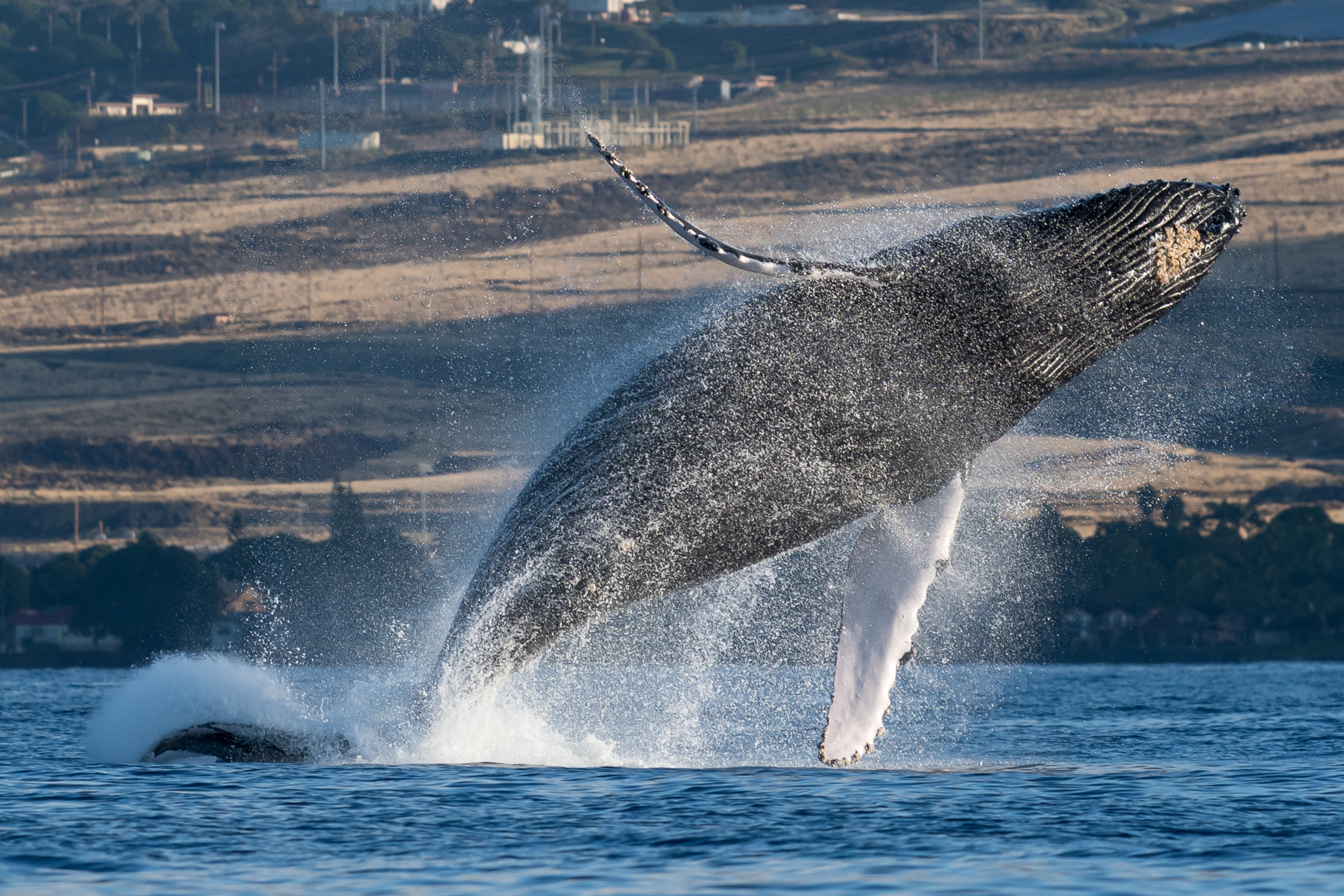
Every winter, thousands of humpback whales make the long journey from Alaska to the warm waters of Hawaii to mate, give birth, and nurse their young. Watching a 40-ton whale launch itself out of the ocean is one of the most unforgettable experiences you can have on the Big Island, and whale watching in Kona is one of the best ways to see it!
The Mango Sunset BnB is located just minutes from Honokōhau Harbor and Kailua Pier, where most Kona whale watching tours depart. This guide covers when whale season happens, the best Kona whale watching tours, where to spot whales from shore, and tips to make the most of your experience.
When Is Whale Watching Season In Kona?
Humpback whale season in Hawaii generally runs from November through May. The first whales usually arrive in late fall, and the last ones head back north in the spring.
That said, the best time for whale watching in Kona is from January through March, when the most whales are in Hawaiian waters. Most Kona whale watching tours run from about December through March or April.
Winter is also one of the busiest times to visit the Big Island, so book your tours and accommodations early. For more details on what each season brings, check out this guide to the best time of year to visit the Big Island. If you're visiting in December, you can pair whale season with Kona's festive holiday celebrations, too!
Why Do Humpback Whales Come To Hawaii?
Humpback whales spend their summers feeding in the cold, nutrient-rich waters near Alaska. When winter arrives, they migrate thousands of miles south to Hawaii's warm, shallow waters to breed and give birth. Calves are born here and spend their first few months nursing and growing stronger before the long swim back north.
In Hawaiian, the humpback whale is called koholā. Whales hold a special place in Hawaiian culture and appear in many traditional stories.
The waters around Hawaii are protected as the Hawaiian Islands Humpback Whale National Marine Sanctuary, which was designated in 1992. It's the only place in the United States where humpback whales mate, give birth, and nurse their calves!
What You Might See While Whale Watching In Kona
Humpbacks are known for being incredibly active at the surface. Here are a few behaviors to watch for:
Blow: A tall, misty spout of air and water as the whale exhales. This is usually the first sign a whale is nearby.
Breach: When a whale launches most of its body out of the water and crashes back down. This is the moment everyone hopes for!
Tail slap: A whale lifts its tail (or fluke) and slaps it on the surface.
Pec slap: A whale rolls on its side and slaps its long pectoral fin on the water.
Spy hop: A whale pokes its head straight up out of the water, as if it's taking a look around.
Mom and calf pairs: Later in the season, you may spot a mother swimming slowly alongside her new calf.
The male humpbacks also sing complex songs during the breeding season. Many Kona whale watching tours use a hydrophone (an underwater microphone) so you can hear the whale songs live from the boat. Fun fact: if you go snorkeling during whale season, you can sometimes hear the songs underwater too!

Best Kona Whale Watching Tours
The best way to see humpback whales up close is on a boat tour. Kona tour captains know the coastline well, and most boats have a naturalist on board to explain what you're seeing.
We recommend booking this top-rated Kona whale watching tour! Here are a few other options to consider:
Body Glove Hawaii Whale Watch
Body Glove runs a roughly 2.5-hour whale watching cruise from downtown Kailua-Kona during whale season. A naturalist narrates the trip, snacks and drinks are included, and you may get to hear whale songs through the hydrophone. Best of all, sightings are guaranteed. If you don't see a whale, you can rebook another tour for free!
Hawaiian Adventures Kona
This third-generation whale watching family runs humpback tours from December through March aboard a 46-foot catamaran. They also offer offshore "pelagic" whale watching from April through November, which means you can go whale watching in Kona year-round!
Captain Zodiac Whale Watch
For a more adventurous ride, Captain Zodiac runs whale watching tours on rigid-hull inflatable rafts. These boats sit lower to the water, making the experience feel even more up close and personal.
Kohala Coast Sunset Whale Watching
If you're spending the day up north, some operators like Kohala Divers offer sunset whale watching cruises from Kawaihae Harbor. Watching whales breach with the sun setting behind them is pure magic!
Pro-tip: Book a morning tour if you can. The ocean is usually calmer in the morning, and you'll have better visibility before the afternoon winds pick up.
Where To See Whales From Shore Near Kona
You don't need to get on a boat to enjoy whale season! On a clear day, you can spot blows and breaches from many spots along the west side of the island. In fact, the Kohala Coast north of Kona sees two to three times more whales than other parts of the island.
Bring binoculars and plenty of patience. Look for spouts on the horizon, then keep your eyes on that area!
Keāhole Point
Keāhole Point, home to the Natural Energy Laboratory of Hawaii, sits right next to the Kona International Airport, just a few minutes from the Mango Sunset BnB. This rocky point juts out into deep water and is one of the official shoreline sites for the annual whale count.
Puʻukoholā Heiau National Historic Site
This national historic site in Kawaihae is home to one of the largest restored temples in Hawaii, built by King Kamehameha I. It sits high above the water, which gives you sweeping views of the ocean and a great vantage point for whale watching. Combine your visit with some Hawaiian history!
Hāpuna Beach State Park
One of my favorite beaches near Kona, Hāpuna Beach is a great place to lay out your towel and scan the horizon for whales. It's about a 38-minute drive from the BnB.
Lapakahi State Historical Park & Kapaʻa Beach Park
Further north along the Kohala Coast, Lapakahi State Historical Park and Kapaʻa Beach Park are quieter spots with wide-open ocean views. They are perfect for a peaceful afternoon of whale spotting on your way to or from North Kohala.
Along The Kona Coast
You can also spot whales from the bays between Kailua-Kona and Keauhou. Keep an eye on the ocean while you're enjoying a sunset cocktail in Kona, since whales often surface just offshore!

Join The Sanctuary Ocean Count
Want to do something meaningful during your trip? Each winter, the Hawaiian Islands Humpback Whale National Marine Sanctuary hosts the Sanctuary Ocean Count, a volunteer whale count from shoreline sites on the Big Island, Oʻahu, and Kauaʻi. Visitors are welcome to join!
The count takes place on the last Saturday of January, February, and March, from 8 am to about 12:15 pm. The 2027 counts are scheduled for January 30, February 27, and March 27. Registration usually opens in early January at oceancount.org, and spots fill up quickly.
Whale Watching Rules & Etiquette In Hawaii
Humpback whales are protected by federal and state law, so it's important to give them plenty of space. Here's what to know:
Stay at least 100 yards away. It is illegal to approach a humpback whale within 100 yards (90 meters) when in or on the water. This includes boats, kayaks, paddleboards, and swimmers.
Keep drones 1,000 feet away. Aircraft and drones must stay at least 1,000 feet (300 meters) from whales.
Let the whales come to you. Licensed tour boats know the rules. If a whale swims closer on its own, the captain will put the engine in neutral and let it pass.
Report injured whales. If you see an injured or entangled whale, call NOAA's marine wildlife hotline at 888-256-9840.
Tips For Whale Watching In Kona
Bring binoculars. They make a big difference, especially when watching from shore.
Wear sunscreen and a hat. There's very little shade on the boats, so use reef-safe sunscreen and bring a light layer for the ride back.
Take motion sickness medicine before you go. The ocean can be choppy, so take it ahead of time if you're prone to seasickness.
Go in the morning. Calmer water and clearer skies make it easier to spot whales.
Be patient. Whales can dive for 10-20 minutes at a time, so keep watching!
Pack a camera, but put it down too. Breaches happen fast, so enjoy the moment!
Looking for more ocean adventures during your trip? Check out the best snorkeling spots near Kona and don't miss the manta ray night snorkel, one of the 25 best things to do in Kona! And after a morning on the water, refuel at one of the best restaurants in Kona.
That brings us to the end of this guide to whale watching in Kona! Whether you head out on a boat tour, join the Sanctuary Ocean Count, or simply watch from the shore, seeing humpback whales in Hawaii is an experience you'll never forget. Planning a winter trip to the Big Island? Book your stay at the Mango Sunset BnB and reserve early, since whale season is our busiest time of year. You'll save by booking direct!